What the Centre for Ageing Better’s latest campaign reminds us
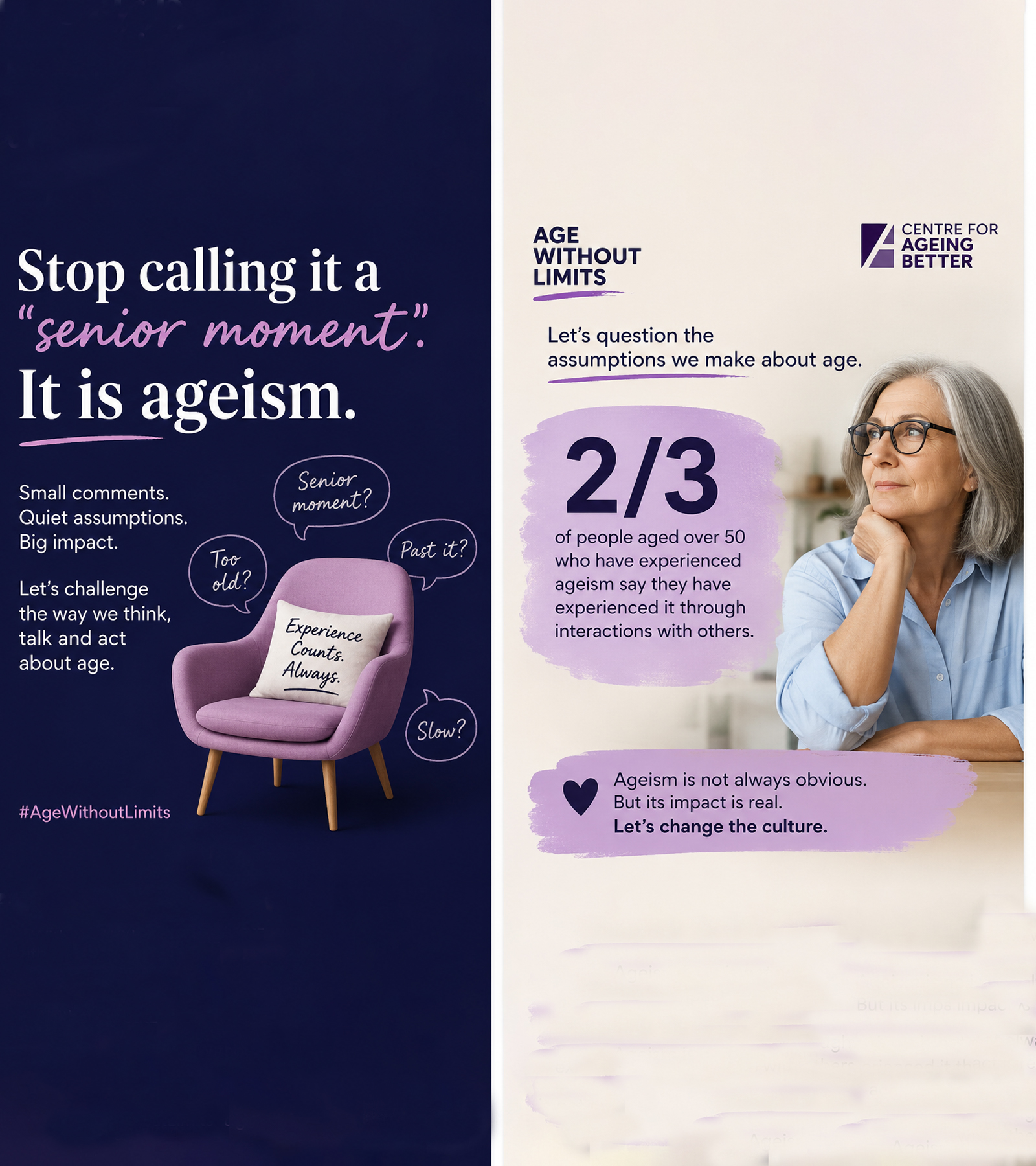
Earlier this month, the Centre for Ageing Better marked Age Without Limits Day through its Age Without Limits campaign, with a clear message: we need to question the assumptions we make about age.
The campaign highlighted that two thirds of people aged over 50 who have experienced ageism say they have experienced it through interactions with others.
These moments may happen at work, in shops, in health settings or in ordinary conversation. They do not always arrive as obvious acts of discrimination. More often, they appear as small, repeated dismissals that gradually shape how older people are seen and treated.
Ageism rarely announces itself
A casual comment about a “senior moment” may seem harmless at the time. Being quietly passed over in a meeting may be explained away as a business decision. Symptoms may be dismissed as “just your age” instead of being properly investigated.
This is not harmless language. It is not simply banter. It is part of a wider pattern that can affect confidence, opportunity and dignity.
The assumptions we do not question
Many people would never describe themselves as ageist. Yet ageism often lives in the assumptions we do not question.
We may assume someone is less adaptable because they are older. We may assume they are no longer ambitious. We may assume they need less attention or fewer opportunities.
Those assumptions carry a cost.
They influence how people are spoken to, whether they are included and whether their experience is valued. Over time, they can affect how older people see themselves.
Everyday language matters
The Centre for Ageing Better’s campaign is a timely reminder that ageism is not only found in policy or formal discrimination. It is also found in everyday language and behaviour.
The question is not simply whether ageism exists.
It is what we are each prepared to do about the assumptions we carry.
So next time we hear the phrase “senior moment”, perhaps we should pause.
Not because every careless phrase is intended to harm, but because language shapes culture. And culture shapes how people are treated.
What have you noticed?
Where have you seen this play out, at work or in everyday life?
I would like to hear your thoughts.